
Home › Custom Busbar Manufacturing
Custom Busbar Manufacturing: Processes, Materials and Capacity
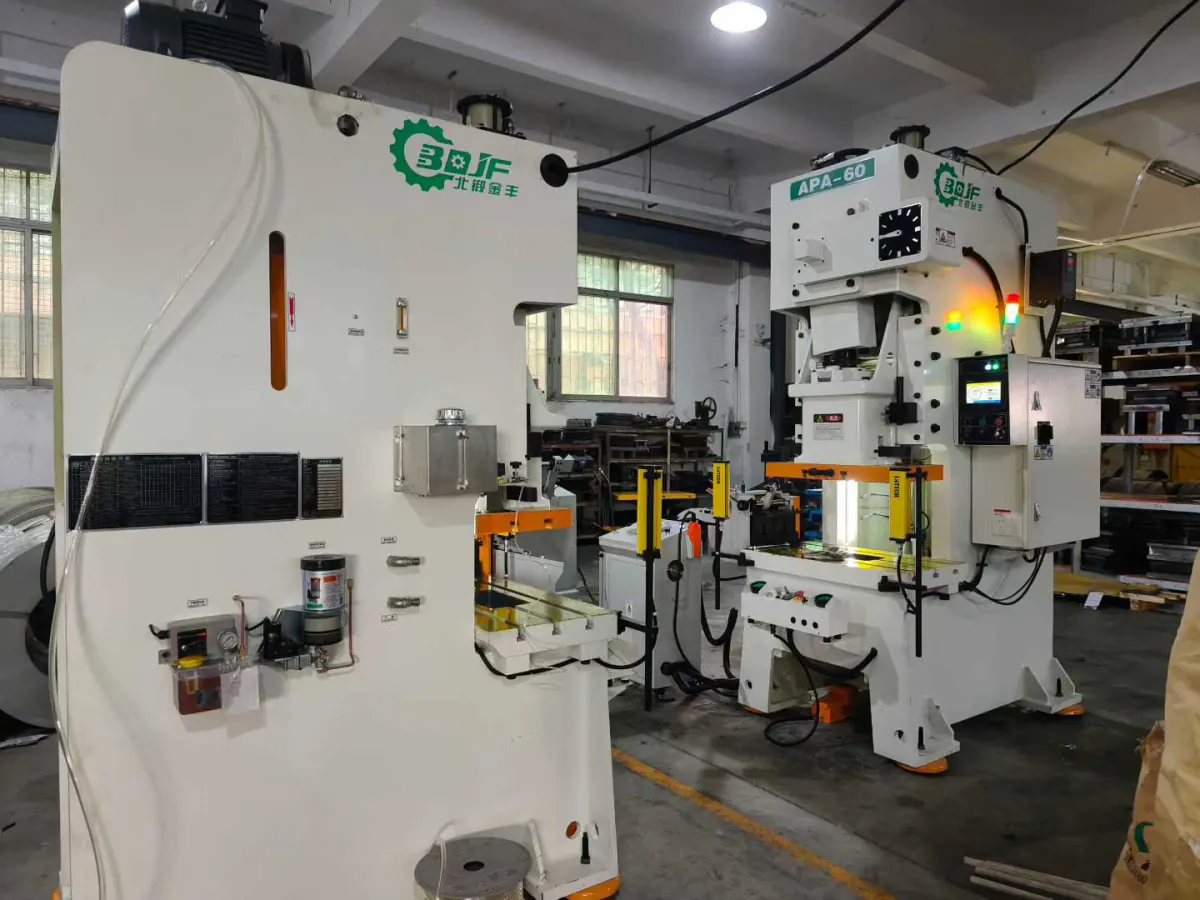
We are a custom busbar manufacturer in China. Copper and aluminum bars are stamped, punched, bent, welded, plated and insulated to your drawing in our own plant in Foshan, Guangdong, with no catalog and no minimum profile. Every part starts from a drawing review.
Processes under one roof
| Process | What it covers |
|---|---|
| Cutting and blanking | Bar and sheet stock cut to developed length |
| Stamping and CNC punching | Holes, slots, profiles and fusible link geometry |
| Bending and forming | Single and compound bends, formed reliefs, twists |
| Welding | Joining stacks and pads, and assembling multi-part conductors |
| Plating | Tin, nickel and silver on contact areas |
| Insulation | Dip coating, powder coating and heat-shrink tubing |
| Assembly | Pressed inserts, hardware, and integration into cell contacting systems |
Keeping these in one plant matters for two reasons that show up in practice. Lead time is predictable because no step queues behind an outside vendor. And a coating fault can be traced back to the copper it went onto, which stops being possible the moment the conductor and the coating come from different companies.
Materials
Copper stock is T2 or C11000 ETP at 100% IACS or better, controlled at incoming inspection with the mill certificate retained against the batch. Aluminum is supplied where weight or cost governs and the joint design accounts for the different expansion rate. Brass and copper-to- aluminum transition bars are available where the application calls for them.
Where a customer specifies a particular alloy, temper or conductivity, that requirement goes into incoming inspection rather than being checked at the end, because a conductivity problem found after forming and plating is a scrapped batch.
What we need to quote
A drawing alone is not enough to quote a busbar properly, because the same outline can be right or badly undersized depending on conditions the drawing does not carry. Send:
- 2D drawing or 3D model, in DWG, DXF, PDF, STEP or IGES
- Continuous current, and peak if it is significant
- Ambient temperature and whether the part sits in free air or an enclosure
- Withstand voltage, if the part is insulated
- Surfaces that must stay bare
- Quantity and target date
If the insulation is not decided, say so. The four insulation methods compared works through the choice, and we will confirm it against your voltage and temperature rather than leaving it with you.
Drawing review comes before the price
Every drawing is reviewed for manufacturability before a quotation goes out: bend radius against stack thickness, pad size against current, insulation clearance at the cut edges, and whether the mask lines leave room for the fasteners. Where something cannot be built as drawn, the question comes back at that point rather than after the first article, when a change costs a tool.
Prototypes through series production
Both run on the same equipment, so a validated sample transfers to production without a process change and without requalification. Prototype quantities are accepted, and for parts needing a new profile the tooling is cut in house, which is what keeps the first-article date reliable.
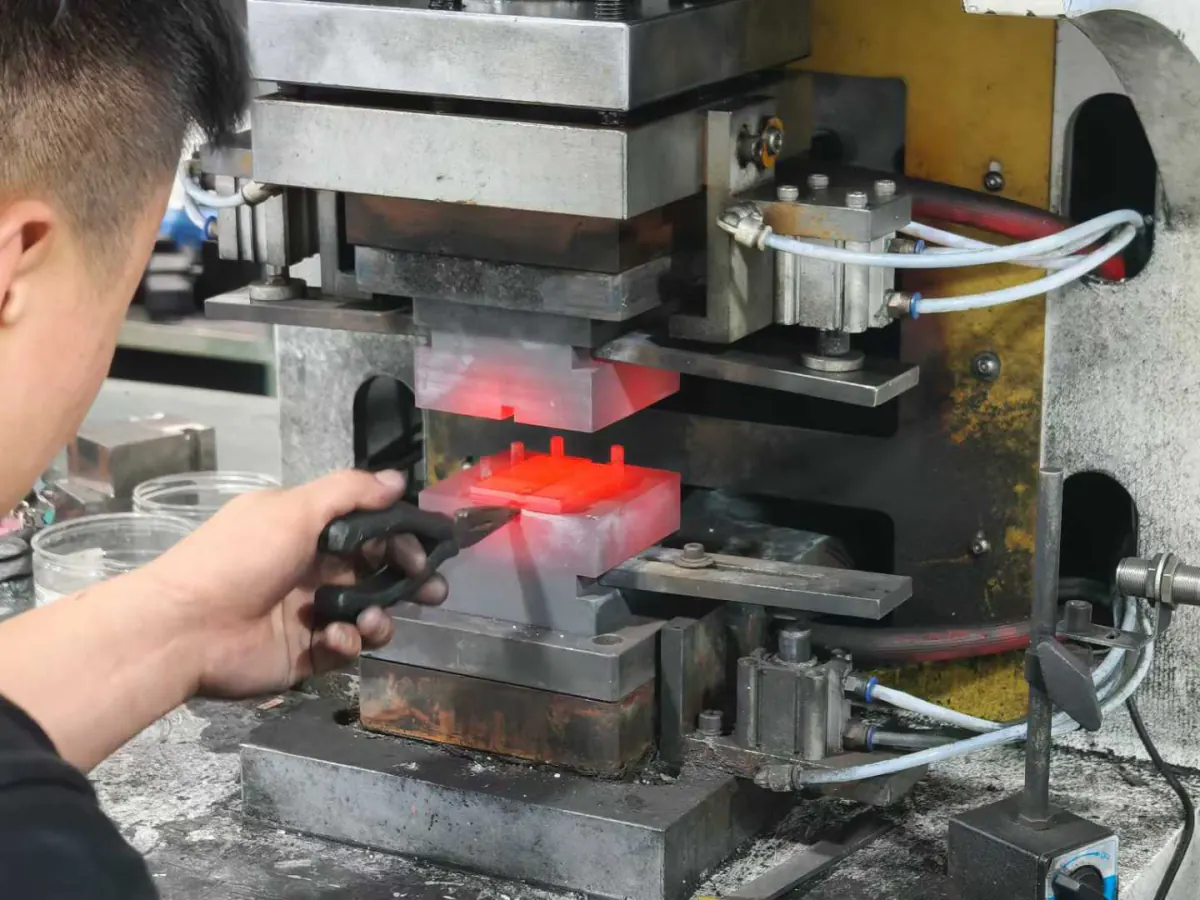
Counting from drawing approval, a first article takes 3 to 7 working days on existing tooling, or 10 to 20 where a tool has to be cut and tried. Insulation adds 2 to 4 on either route.
Quality
Dimensional and visual inspection covers every part against the drawing. Salt spray, dielectric strength, cross-cut adhesion and temperature rise are run to the international standards and their Chinese equivalents, and a first article report accompanies the first production batch. Methods and standards are on the inspection, sampling and first article reports page.
Frequently asked questions
- Are you a manufacturer or a trading company?
- A manufacturer, with the plant in Shunde District, Foshan. The quotation, the tooling and the inspection report all come from the same place as the parts. Visits are arranged by appointment, and a visit covers the whole process rather than a sales office.
- Is there a minimum order quantity?
- Not a fixed one. What sets the floor is tooling: a profile that runs on existing tools has no practical minimum, while a new tool has to be paid for somewhere in the price.
- What drawing formats do you accept?
- Native CAD is preferred because it carries tolerances the export may drop, but a dimensioned PDF is enough to open a quotation. STEP or IGES for 3D, DWG or DXF for 2D.
- Can you make aluminum and copper-to-aluminum busbars?
- Yes. Tell us the joint design as well as the material, because a bimetallic joint that is right on paper can still fail in service if the two metals cycle against a rigid mount.
- Do you supply complete assemblies?
- Yes, including cell contacting systems where the conductor also carries sensing back to the BMS, so you receive one part number rather than coordinating three deliveries.
- Can you work to our internal specification?
- Yes, and it takes precedence over our default where the two differ. Send it with the drawing so the review picks up any requirement that changes the tooling rather than only the inspection.
Request a quote
Send the drawing and the electrical conditions together. Start an RFQ.