
Home › Insulation › PVC Dipping Insulated Busbar
PVC Dipping Insulated Busbar: Process, Specification and Limits
A PVC dipping insulated busbar is a copper bar coated by lowering the preheated part into liquid PVC plastisol, which fuses into a continuous elastic layer covering every face and cut edge. It is the usual choice where a busbar meets moisture, salt or handling damage inside a battery pack, an energy storage cabinet or an electrical enclosure.
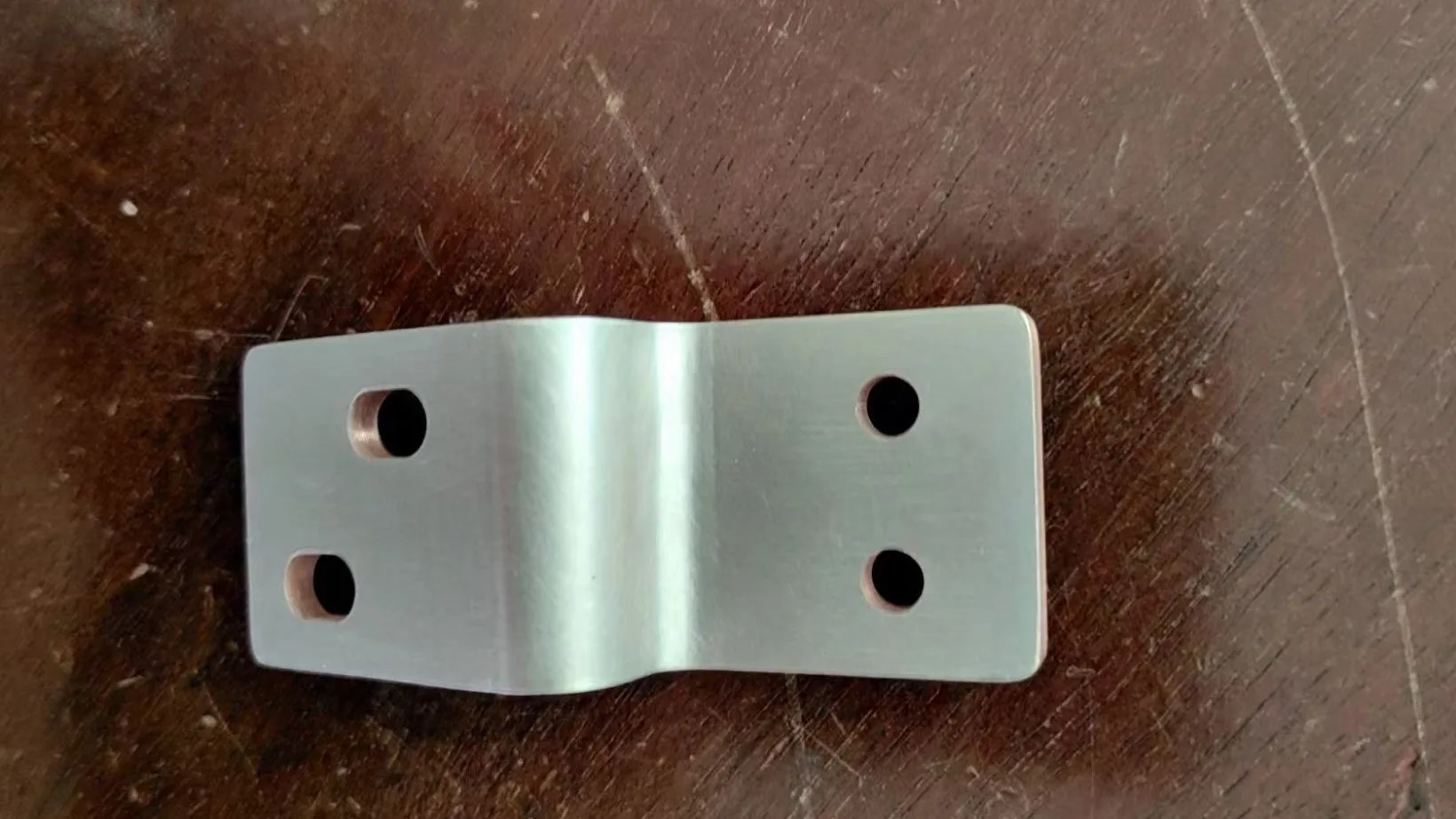
What dipping does that other methods do not
Dip coating is the only common insulation method that covers the part in one continuous operation with no seam. Heat-shrink tubing leaves the cut ends open unless they are capped separately. Powder coating covers edges well but is a harder, thinner film. Dipped PVC produces a thicker, elastic skin that follows the profile into corners and around bend radii, which is why it survives handling on an assembly line better than the alternatives.
The trade-off is temperature. PVC compounds used for busbar work are commonly rated to around 105 °C continuous. Where the part will sit next to a hot power module or inside a sealed cabinet running near its thermal limit, the coating becomes the constraint rather than the copper.
How the dipping line runs
The sequence matters more than the recipe. Copper arrives punched, bent and plated. It is degreased, because plastisol will not bond through rolling oil. Contact pads and holes are masked. The part is preheated so that the plastisol gels on contact rather than running off. It is then dipped at a controlled withdrawal rate, which is what sets film thickness, and cured in an oven until the PVC fuses. Masking comes off last, leaving bright copper at the joints.
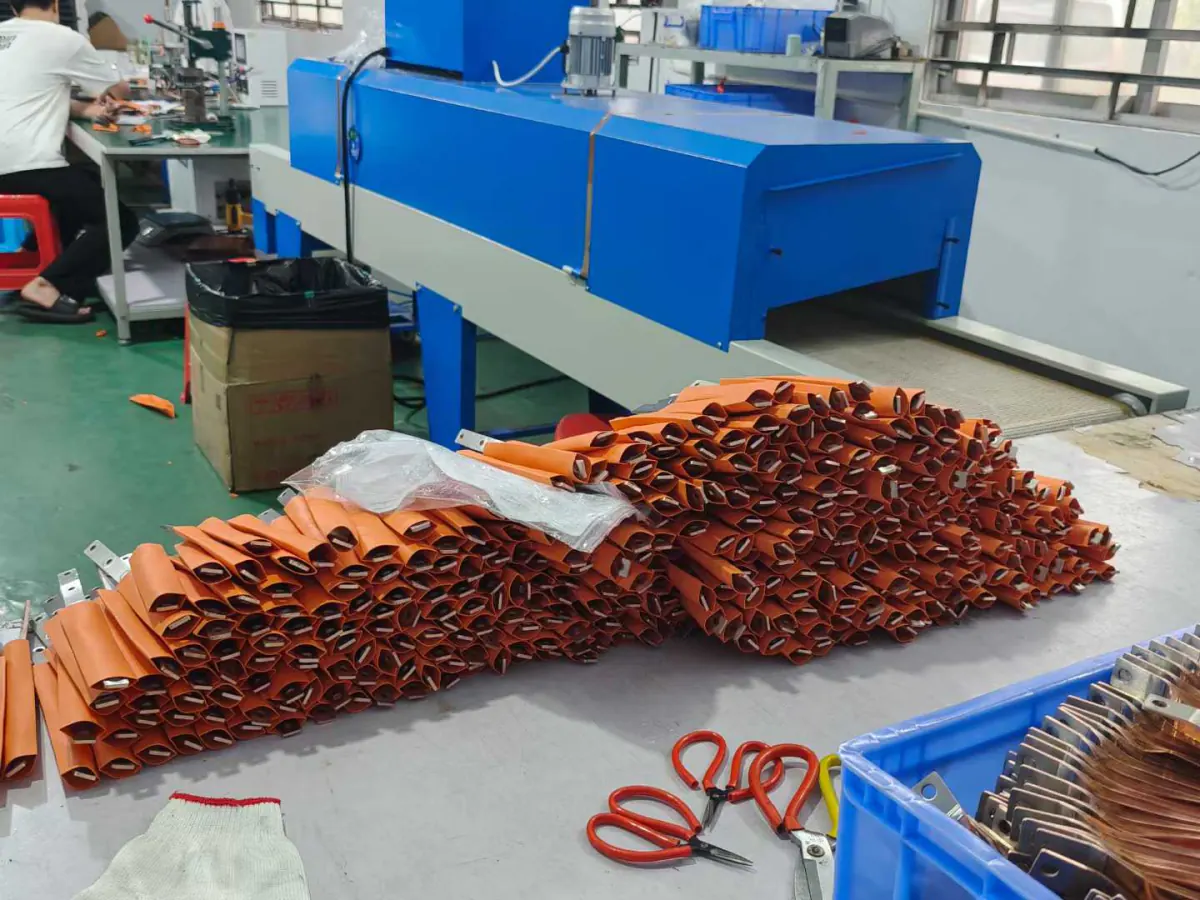
Two steps decide whether the result is good. Preheat temperature controls how much material picks up: too cool and the film is thin at the edges, too hot and it sags at the bottom of the part. Withdrawal rate controls uniformity along the length. Both are set per part geometry, which is why a new profile needs a short trial run before the first production batch.
Coating specification
| Property | Typical range | Note |
|---|---|---|
| Coating thickness | 0.4 to 0.8 mm | Two dips where higher withstand is needed |
| Continuous temperature | Around 105 °C | Compound dependent |
| Colors | Red, black, orange, blue, yellow, green | Used for phase or polarity identification |
| Edge coverage | Full, including cut edges | Main advantage over heat shrink |
| Flame rating | Compounds available to UL 94 V-0 | Specify if required |
| Masked areas | Contact pads, holes, weld zones | Masking tolerance is quoted per part |
Design rules that decide whether the coating holds
Sharp edges are the most common cause of a thin spot. Plastisol pulls back from a knife edge as it gels, so a punched bar that has not been deburred will show its lowest dielectric strength exactly where the field is highest. Deburring or a small radius on the edge fixes it.
Bend before coating, not after. PVC has enough elongation to survive a gentle form, but a tight bend applied to a cured film will whiten the outer surface and can open microcracks that only show up after a humidity cycle. Where the geometry genuinely has to be adjusted at assembly, a flexible construction is the better answer than a formed rigid bar; the options are compared on the laminated flexible busbar product page.
Leave clearance around masked areas. The coating builds a small fillet where it meets the mask line, and a bolt head or a busbar clamp that lands on that fillet will not seat flat.
How the coating is verified
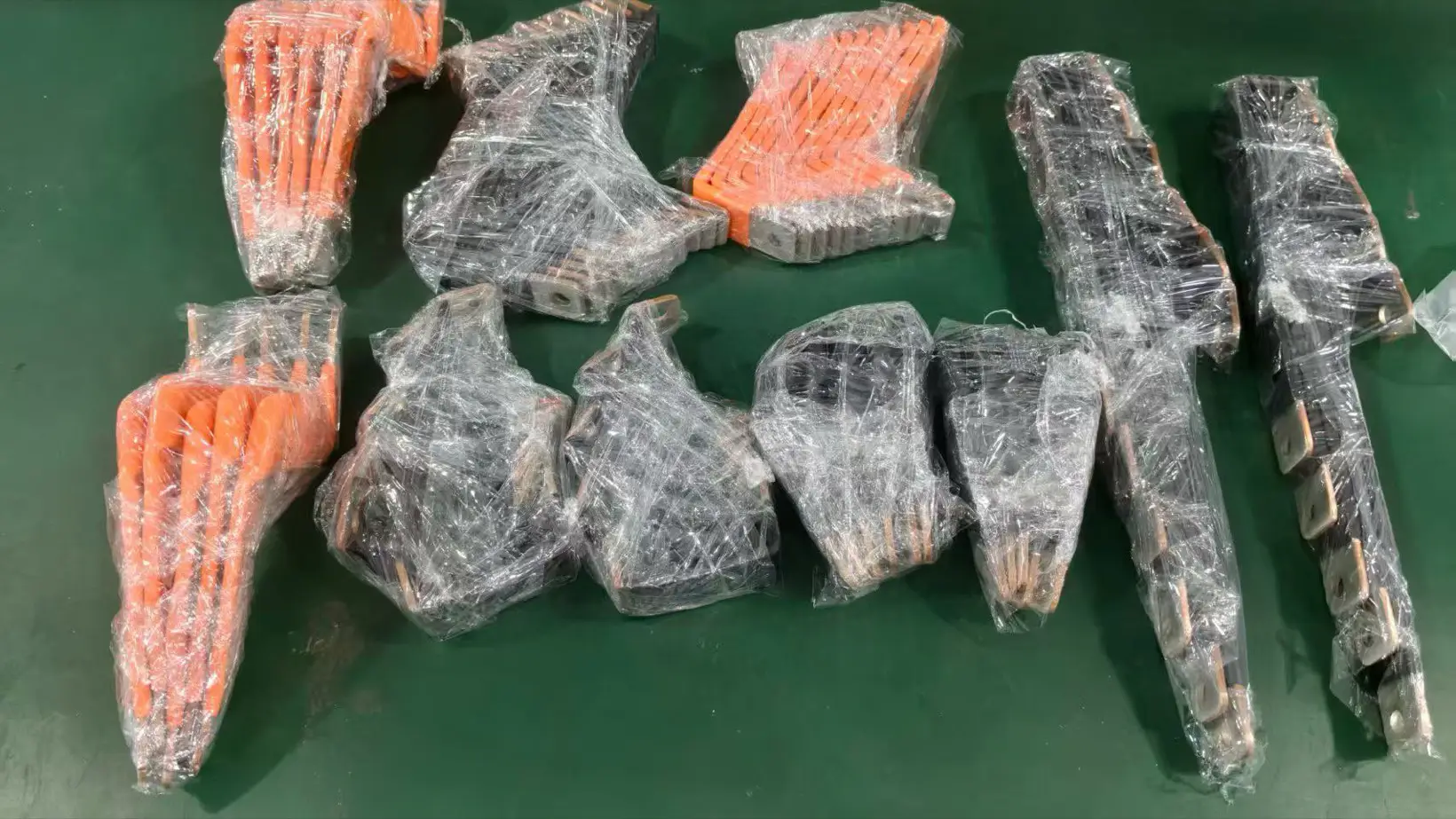
Three checks cover most requirements, and all three are routine rather than special. Corrosion resistance is run as neutral salt spray to ISO 9227 salt spray test method, with GB/T 10125 adopting the same NSS conditions, so a report under either standard is directly comparable. Adhesion is graded by the cross-cut test in ISO 2409, identical to GB/T 9286, where the result is a class from 0 to 5 rather than a percentage and industrial work is normally accepted at Class 0 or 1. Electric strength is measured to IEC 60243-1, or its identical Chinese equivalent GB/T 1408.1.
Results for your part, at your coating thickness, are issued with the first article. Equipment and the full inspection sequence are described on our busbar testing and inspection page.
PVC dipping or epoxy powder
| PVC dipping | Epoxy powder | |
|---|---|---|
| Film thickness | 0.4 to 0.8 mm | 0.3 to 0.6 mm |
| Dielectric strength per mm | Lower | Higher |
| Temperature | Around 105 °C | Higher |
| Dimensional control | Looser | Tighter |
| Impact and abrasion | Elastic, forgiving | Harder, can chip |
| Best for | Moisture, salt, handling | Thin layer, tight fit, higher withstand |
If the part has to fit a machined pocket or reach a high withstand voltage in a thin layer, epoxy powder for a thinner, harder film is the better fit. All four methods, including heat shrink and molded covers, are set side by side on the the four insulation options side by side.
Where dipped busbars are used
Battery packs and energy storage cabinets account for most of the volume, connecting cells, modules, contactors and fuses where condensation is a real risk. Electrical enclosures and distribution panels use the same parts at larger cross-sections. Marine and outdoor equipment choose dipping specifically for salt resistance, and telecom and rail equipment for the same reason.
Two standards set the safety context around these parts. ISO 6469-1 electrical safety covers the rechargeable energy storage system in road vehicles, and IEC 62619 safety requirements covers industrial secondary cells and batteries. Neither dictates a coating, but both drive the clearance and withstand numbers that the coating has to deliver.
From drawing to coated part
Send a 2D drawing or a 3D model with the masked areas marked. If they are not marked we will propose them and come back for approval, because a mask line in the wrong place is the single most expensive thing to discover at assembly. Counting from drawing approval, a first article takes 3 to 7 working days on existing tooling or 10 to 20 if a tool has to be cut, and the dipping and cure cycle adds 2 to 4 on top. Materials, processes and capacity are on the materials, processes and plant capacity page.
Frequently asked questions
- Are you a busbar manufacturer or a trading company?
- We are a manufacturer. Stamping, bending, welding, plating and both insulation lines are in our own plant in Foshan, China. Factory visits are welcome by appointment.
- What thickness of PVC coating do I need?
- It follows the withstand voltage you have to reach, not a fixed number. A single dip in the 0.4 to 0.6 mm range covers most low-voltage work; a second dip is added where the specification is higher. Tell us the test voltage and we will confirm the build.
- Can the contact pads stay bare?
- Yes. Pads, holes and weld zones are masked before dipping and unmasked after cure, so the joint surface stays bright plated copper.
- Does the color mean anything?
- Only what you decide it means. Color is commonly used for phase or polarity identification and carries no electrical difference. Tell us the convention your assembly line uses.
- What is the temperature limit?
- Around 105 °C continuous for the compounds normally used on busbars. Above that the coating rather than the copper sets the rating, and epoxy powder or a different construction should be considered.
- Can you coat a busbar we already have?
- Usually yes, provided the surface is clean and the masking requirement is clear. Send a sample and a drawing marking what must stay bare.
Request a quote
Send the drawing, the withstand voltage, the operating temperature and the areas that must stay bare. Start an RFQ.